
Stainless steels are alloy steels that contain up to 1.2% carbon and at least 10.5% chromium, with or without other elements. These steels exhibit a wide range of strength levels, excellent corrosion resistance and an aesthetically pleasing appearance.
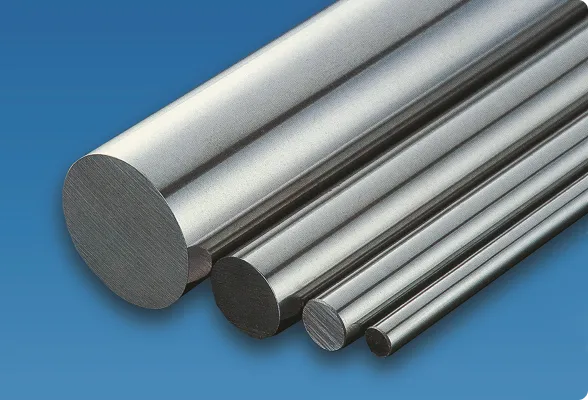
Ferritic stainless steels are stainless steels that are used in a condition in which the microstructure consists essentially of ferrite and carbides. These steels cannot be strengthened by heat treatment.
However, they can be strengthened moderately by cold working. They are magnetic, have good ductility, and possess good resistance to corrosion and oxidation.
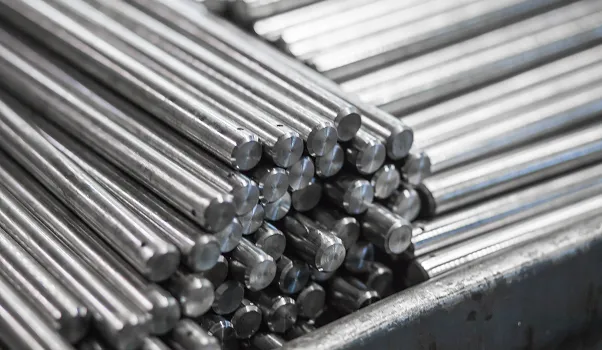
Product Information
| Element Composition by Weight (%) | ||||||||||
|---|---|---|---|---|---|---|---|---|---|---|
| JIS | AISI | Carbon (C) | Silicon (Si) | Manganese (Mn) | Phosphorus (P) | Sulfur (S) | Nickel (Ni) | Chromium (Cr) | Molybdenum (Mo) | Others |
| SUS430F | 430F | ≤ 0.12 | ≤ 1.00 | ≤ 1.25 | ≤ 0.06 | ≥ 0.15 | – | 16.0-18.0 | ≤ 0.60 | – |
Remarks
1. Certain Japanese and Industrial Standard (JIS) has American Iron and Steel Institute (AISI) equivalent specifications
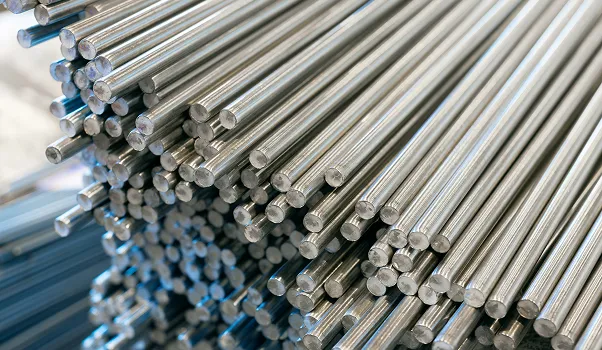
Martensitic stainless steels are stainless steels that can be harden by heat-treatment, i.e. they develop a martensitic structure when rapidly cooled from austenitizing temperature. These steels in the hardened tempered condition possess high strength and hardness, fairly good ductility, adequate toughness and good wear resistance. They also resist corrosion in mild environments. They are magnetic.
Product Information
| Element Composition by Weight (%) | ||||||||||
|---|---|---|---|---|---|---|---|---|---|---|
| JIS | AISI | Carbon (C) | Silicon (Si) | Manganese (Mn) | Phosphorus (P) | Sulfur (S) | Nickel (Ni) | Chromium (Cr) | Molybdenum (Mo) | Others |
| SUS416 | 416 | ≤ 0.15 | ≤ 1.00 | ≤ 1.25 | ≤ 0.06 | ≥ 0.15 | ≤ 0.06 | 12.0-14.0 | ≤ 0.6 | – |
| SUS416F | – | ≤ 0.15 | ≤ 1.00 | ≤ 1.25 | ≤ 0.06 | ≥ 0.25 | ≤ 0.06 | 12.0-14.0 | ≤ 0.6 | – |
| SUS420F | 420F | 0.26-0.40 | ≤ 1.00 | ≤ 1.25 | ≤ 0.06 | ≥ 0.15 | ≤ 0.06 | 12.0-14.0 | ≤ 0.75 | – |
Remarks
1. Certain Japanese and Industrial Standard (JIS) has American Iron and Steel Institute (AISI) equivalent specifications
Austenitic stainless steels are stainless steels that have been sufficiently alloyed with nickel, or by a combination of nickel, manganese and nitrogen, to produce an austenitic structure at ambient temperature.Austenitic steels cannot be hardened by heat treatment, but they can be significantly strengthened by cold working. In the annealed condition, austenitic stainless steels are essentially nonmagnetic, although some of them may become slightly magnetic by cold working.
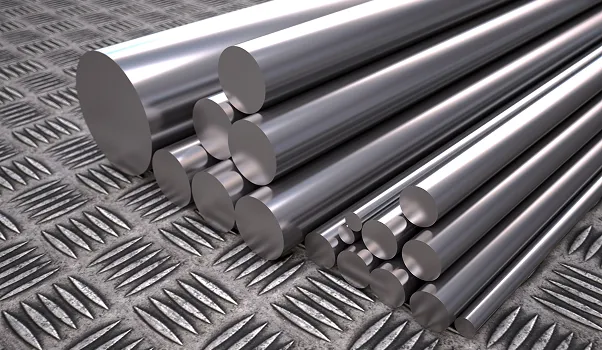
Product Information
| Element Composition by Weight (%) | ||||||||||||
|---|---|---|---|---|---|---|---|---|---|---|---|---|
| JIS | AISI | Carbon (C) | Silicon (Si) | Manganese (Mn) | Phosphorus (P) | Sulfur (S) | Nickel (Ni) | Chromium (Cr) | Molybdenum (Mo) | Copper (Cu) | Nitrogen (N) | Others |
| SUS303 | 303 | ≤ 0.15 | ≤ 1.00 | ≤ 2.00 | ≤ 0.20 | ≥ 0.15 | 8.00-10.0 | 17.0-19.0 | ≤ 0.60 | – | – | – |
| SUS303CU | – | ≤ 0.15 | ≤ 1.00 | ≤ 3.00 | ≤ 0.20 | ≥ 0.15 | 8.00-10.0 | 17.0-19.0 | ≤ 0.60 | 1.50-3.50 | – | – |
| SUS304 | 304 | ≤ 0.08 | ≤ 1.00 | ≤ 2.00 | ≤ 0.045 | ≤ 0.03 | 8.00-10.5 | 18.0-20.0 | – | – | – | – |
| SUS316 | 316 | ≤ 0.08 | ≤ 1.00 | ≤ 2.00 | ≤ 0.045 | ≤ 0.03 | 10.0-14.0 | 16.0-18.0 | 2.00-3.00 | – | – | – |
| SUS316L | 316L | ≤ 0.03 | ≤ 1.00 | ≤ 2.00 | ≤ 0.045 | ≤ 0.03 | 12.0-15.0 | 16.0-18.0 | 2.00-3.00 | – | – | – |
Remarks
1. Certain Japanese and Industrial Standard (JIS) has American Iron and Steel Institute (AISI) equivalent specifications
2. Remaining element will be iron (Fe).
Speak with our team for expert recommendations and supply support.